📅24 November 2026 | 9:30 – 17:00 EET | Sofia Tech Park, Sofia, Bulgaria| Hybrid | English
On 24 November, CRACoWi will join CRA Standards Unlocked – EU Tour at Sofia Tech Park, Bulgaria, bringing together cybersecurity experts, standardisation specialists, EU-funded projects and companies preparing for the Cyber Resilience Act (CRA).
As organisations move towards CRA compliance, understanding the requirements is only the beginning. The real challenge is putting them into practice, identifying relevant standards and finding tools that can support the process.
Katherine Leese from our consortium partner SevenShift will represent CRACoWi and introduce Bunkai, a tool developed within the CRACoWi project to support practical CRA compliance.
The event is also an opportunity to learn more about the ongoing development of harmonised CRA standards, discover solutions from other European projects and exchange knowledge with organisations working on similar challenges.
Are you developing or manufacturing digital products, preparing for CRA compliance, or interested in collaborating with CRACoWi? Join us to discover our work, ask questions and explore opportunities for cooperation.
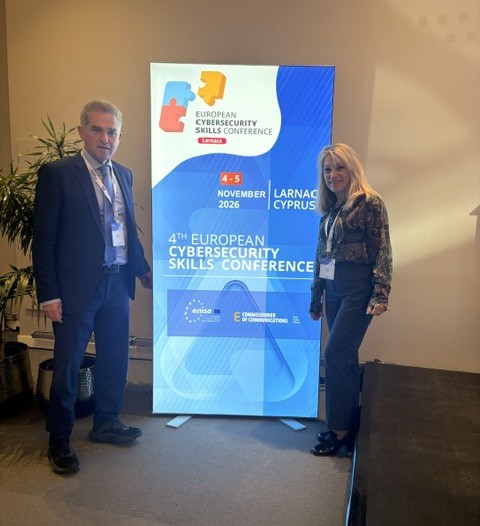
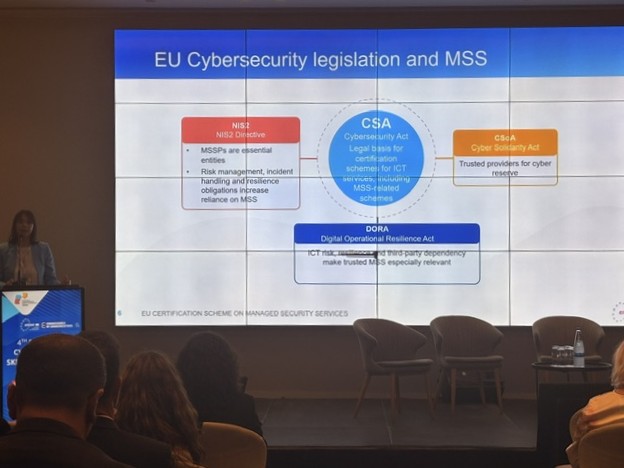
On 4–5 November, CRACoWi consortium partners attended the4th European Cybersecurity Skills Conference, organised by ENISA and the Digital Security Authority (DSA) of Cyprus in Larnaca, Cyprus.
The conference brought together representatives of the European cybersecurity ecosystem to exchange knowledge and discuss how Europe can strengthen its cybersecurity workforce and develop the skills needed to respond to emerging challenges.
Among the key topics were the evolving European Cybersecurity Skills Framework (ECSF), the impact of AI on cybersecurity skills, recognition of cybersecurity competences and the importance of cooperation between industry, academia, public institutions and training providers.
For us at CRACoWi, these discussions are particularly relevant. While our project develops tools to help organisations navigate the Cyber Resilience Act, we also recognise that technology and regulatory guidance alone are not enough. Companies need the knowledge and practical skills to understand requirements and apply them throughout the product lifecycle.
This is why capacity building and knowledge sharing are important parts of CRACoWi, particularly through our CRAcademy, where we provide training, webinars and practical resources to support organisations preparing for the CRA.
Participation in European initiatives like this helps us stay connected with the wider cybersecurity ecosystem, exchange perspectives and identify opportunities for future cooperation.
Thank you to our consortium partners for representing CRACoWi and contributing to these important European discussions!
On 22 October, the European Union Agency for Cybersecurity (ENISA) published its new Technical Advisory for Software Bill of Materials (SBOM), providing practical guidance for organisations, particularly micro-, small and medium-sized enterprises (SMEs), taking their first steps towards software supply chain transparency.
Modern software products can contain hundreds or even thousands of components. Without knowing what those components are, identifying vulnerabilities and responding to emerging cybersecurity risks becomes much more difficult.
An SBOM provides visibility into the components that make up a software product, helping organisations improve traceability, identify potentially affected components and support vulnerability management throughout the product lifecycle.
ENISA’s new advisory goes beyond explaining what an SBOM is. It provides practical guidance on:
SBOM implementation – architecture, data flows and lifecycle management, including integration into software development processes.
Threats and risks – an indicative threat model and security risks associated with the SBOM ecosystem.
Security measures – recommendations for addressing risks, improving integration and supporting secure SBOM management.
The advisory also builds on ENISA’s Secure by Design and Default Playbook and considers relevant requirements under the Cyber Resilience Act (CRA).
For manufacturers and SMEs preparing for the CRA, this is another useful resource for understanding how software component transparency can support security and vulnerability management in practice.
At CRACoWi, we welcome practical resources that help organisations move from understanding regulatory requirements to implementing cybersecurity measures.
The CRACoWiconsortium gathered in Ljubljana, Slovenia, on 14 October 2026 for its fourth plenary meeting, hosted by project partner Digital Innovation Hub Slovenia (DIH Slovenia). The meeting brought together consortium partners to review project progress, discuss the development and validation of the CRACoWi Wizard, and align priorities for the final year of the project.
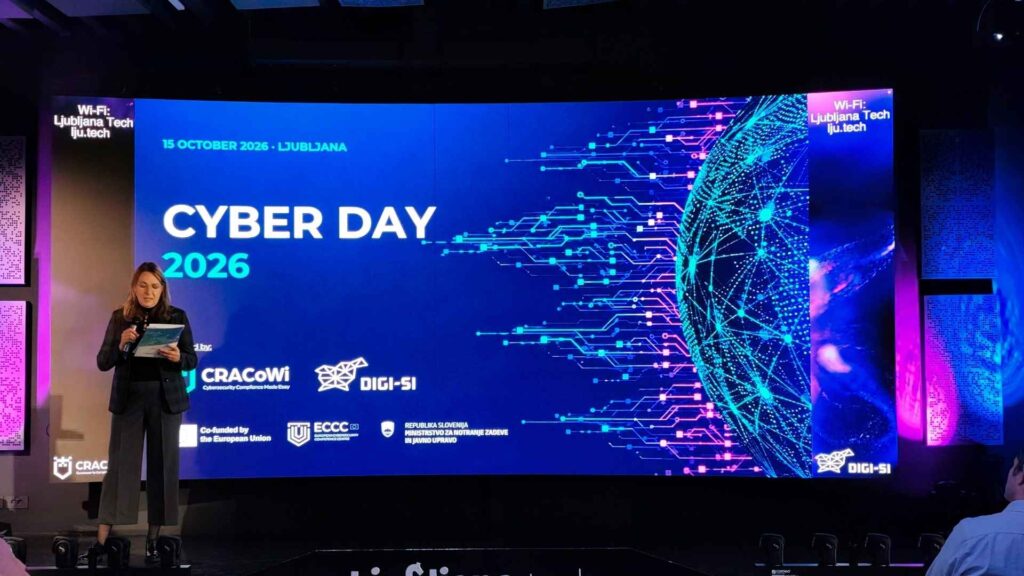
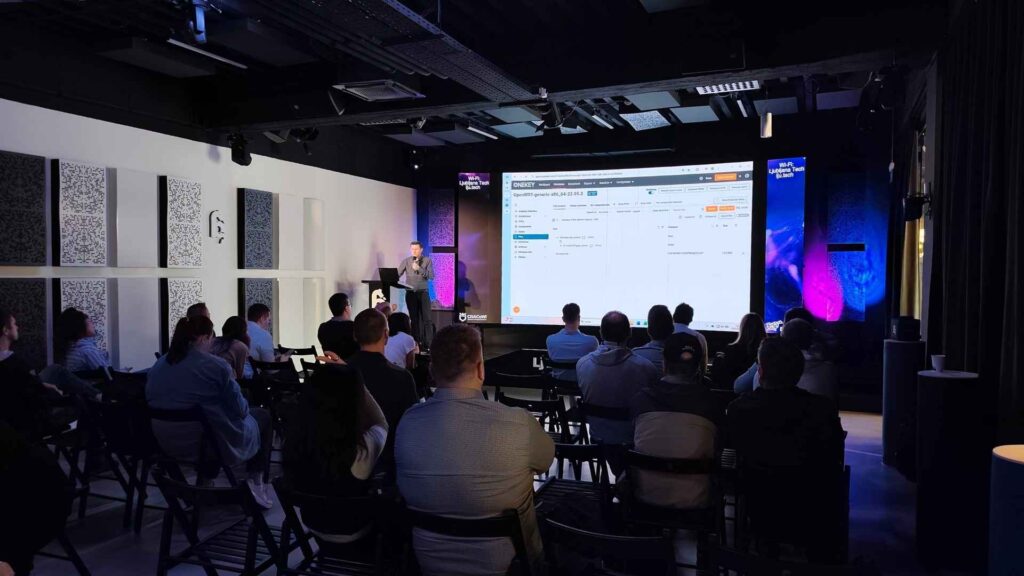
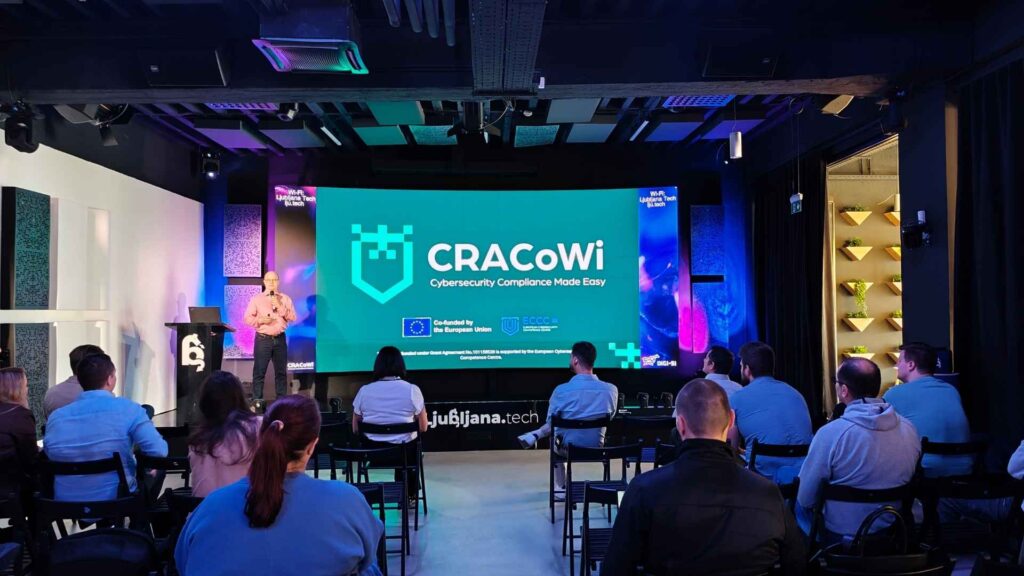
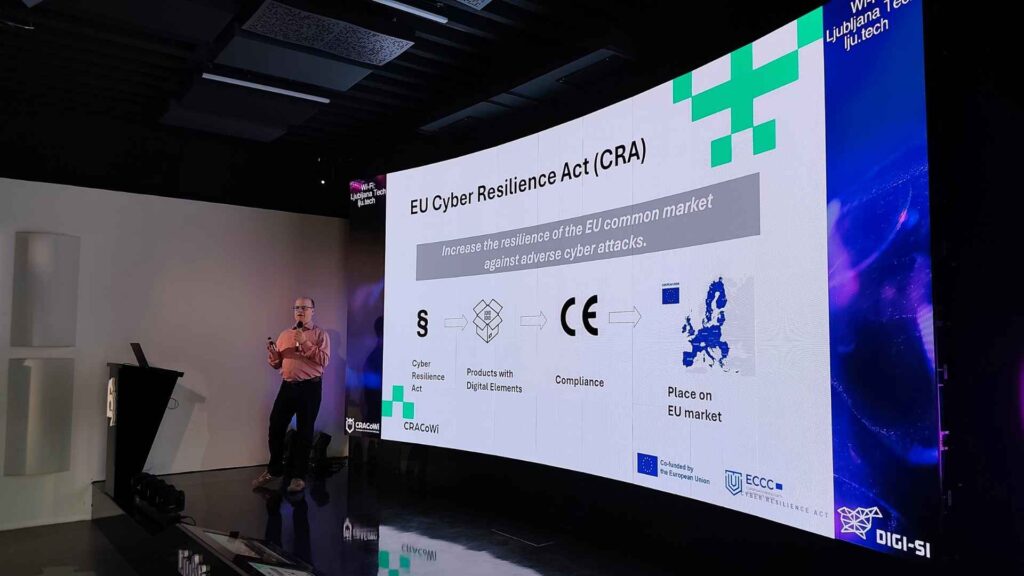
The two-day gathering continued on 15 October with the consortium’s participation in Cyber Day 2026, providing an opportunity to engage with companies, cybersecurity experts and European initiatives working to strengthen cyber resilience and support the implementation of the Cyber Resilience Act (CRA).
Advancing the CRACoWi Wizard Towards Validation
With the project entering its final year, the Ljubljana plenary focused on moving from development towards implementation, validation and the practical application of project results.
A technical workshop brought partners together to review the current status of the CRACoWi Wizard’s functionalities, demonstrate the user journey and discuss the next steps in its development. Particular attention was given to the implementation and validation roadmap, including cooperation with use case owners and preparations for validating the Wizard against practical CRA compliance scenarios.
These activities are essential to ensuring that the Wizard responds to the needs of companies navigating the Cyber Resilience Act, particularly SMEs, manufacturers, distributors and importers.
Aligning Technical Development with CRA Requirements
As the European regulatory and standardisation landscape continues to evolve, the consortium also addressed developments in CRA standardisation and certification. Michael Beine from Bureau Veritas contributed an update on the status and roadmap of relevant standards and certification activities, including their implications for the CRACoWi Wizard.
The meeting also covered preparations for the final phase of project activities related to evidence and traceability, shared knowledge, feedback and coordination with use case partners. Alongside technical development, partners reviewed communication, dissemination and capacity-building activities, including project KPIs and priorities for the final year.
These discussions supported a shared understanding of the work ahead and the importance of connecting technical results with practical support for stakeholders.
Connecting with Companies at Cyber Day 2026
The consortium gathering continued on 15 October with participation in Cyber Day 2026, an event focused on translating cybersecurity requirements into practical action.
As an event partner (organiser), CRACoWi contributed to the programme through its expertise on the Cyber Resilience Act and the tools being developed to support companies preparing for compliance.
Michael Beine from Bureau Veritas addressed the CRA from the SME perspective, while Pablo Endres from Seven Shift and Jacek Trossen from ONEKEY presented CRACoWi tools, giving participants an opportunity to learn more about the project’s approach to supporting CRA compliance.
Cyber Day also brought together representatives of other European cybersecurity initiatives like INTERCEPT and ALiEnS-SOC projects, creating opportunities for knowledge exchange, stakeholder engagement and collaboration.
For CRACoWi, participation provided a valuable opportunity to connect project development with the challenges faced by companies and to introduce the support available through the project.
Looking Ahead to the Final Year
The Ljubljana plenary marked an important point in CRACoWi’s implementation, with the consortium concentrating on the activities needed to bring its results closer to practical use.
Over the coming months, attention will remain on advancing the Wizard, working with use case partners on validation, incorporating relevant regulatory and standardisation developments, and expanding stakeholder engagement and capacity-building activities.
Through the CRACoWi Wizard, free CRA Scope Assessment and CRAcademy resources, the project aims to make CRA compliance more accessible and manageable, particularly for SMEs.
The consortium thanks Digital Innovation Hub Slovenia for hosting the fourth plenary meeting and all partners for their continued contributions. The two days in Ljubljana provided an opportunity to strengthen coordination within the consortium while connecting the project’s work with the wider European cybersecurity community.
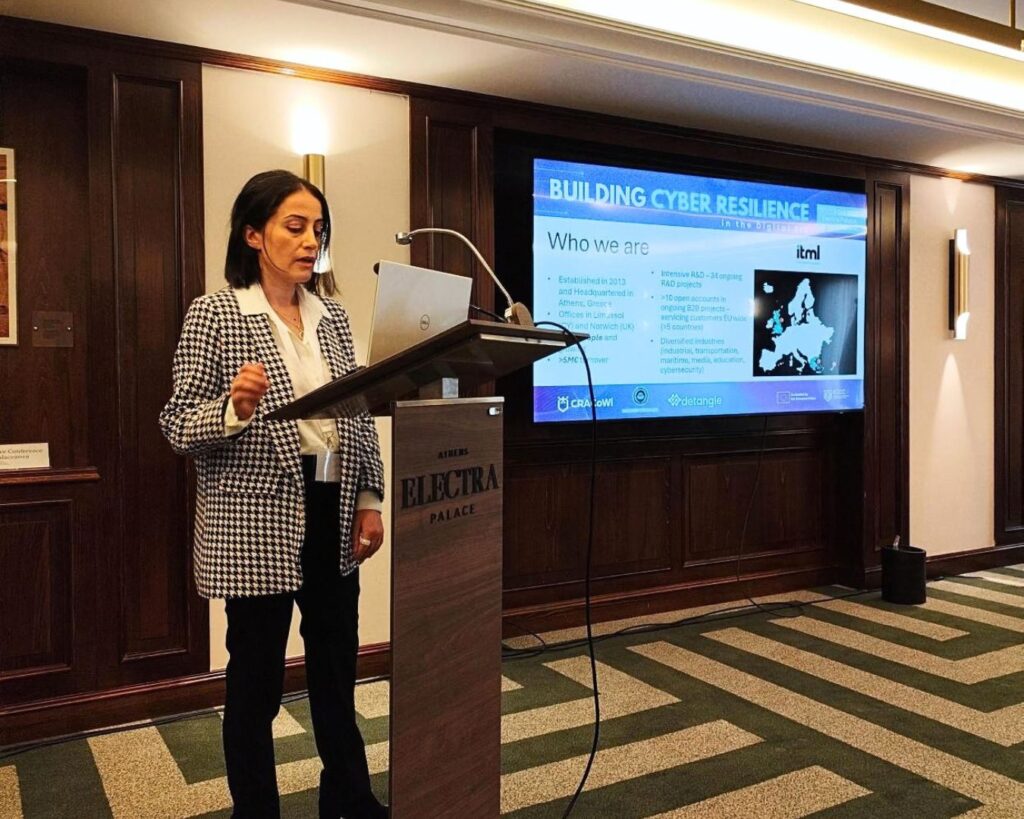
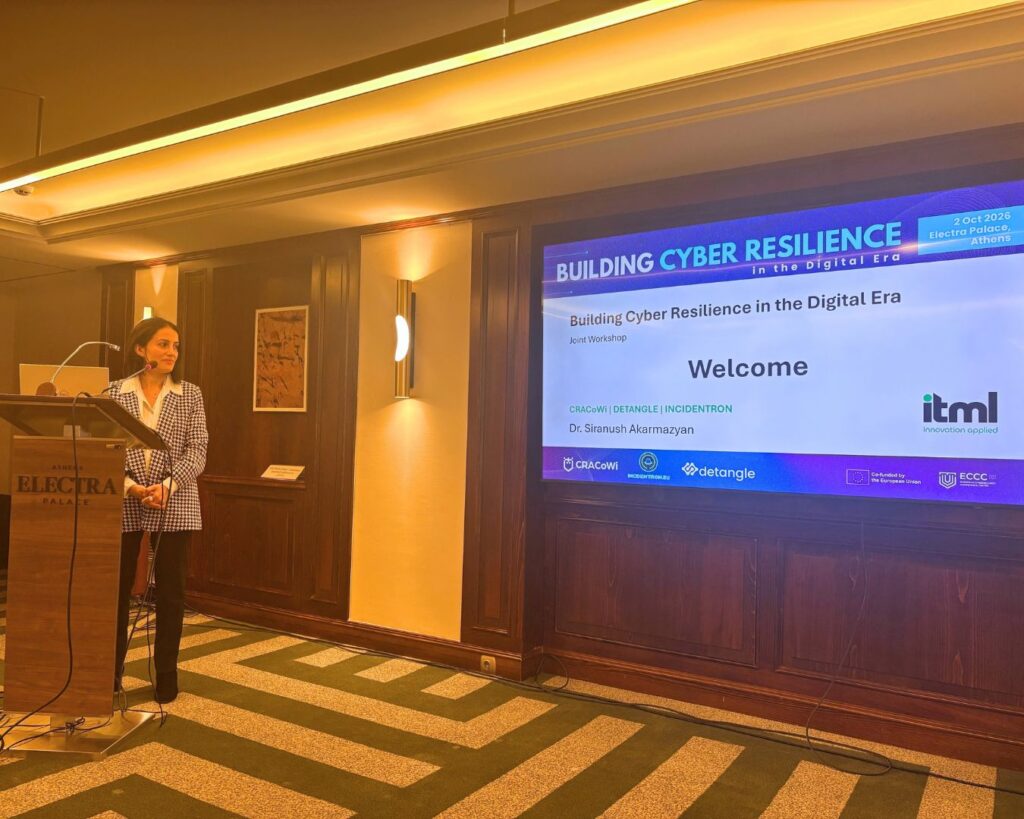
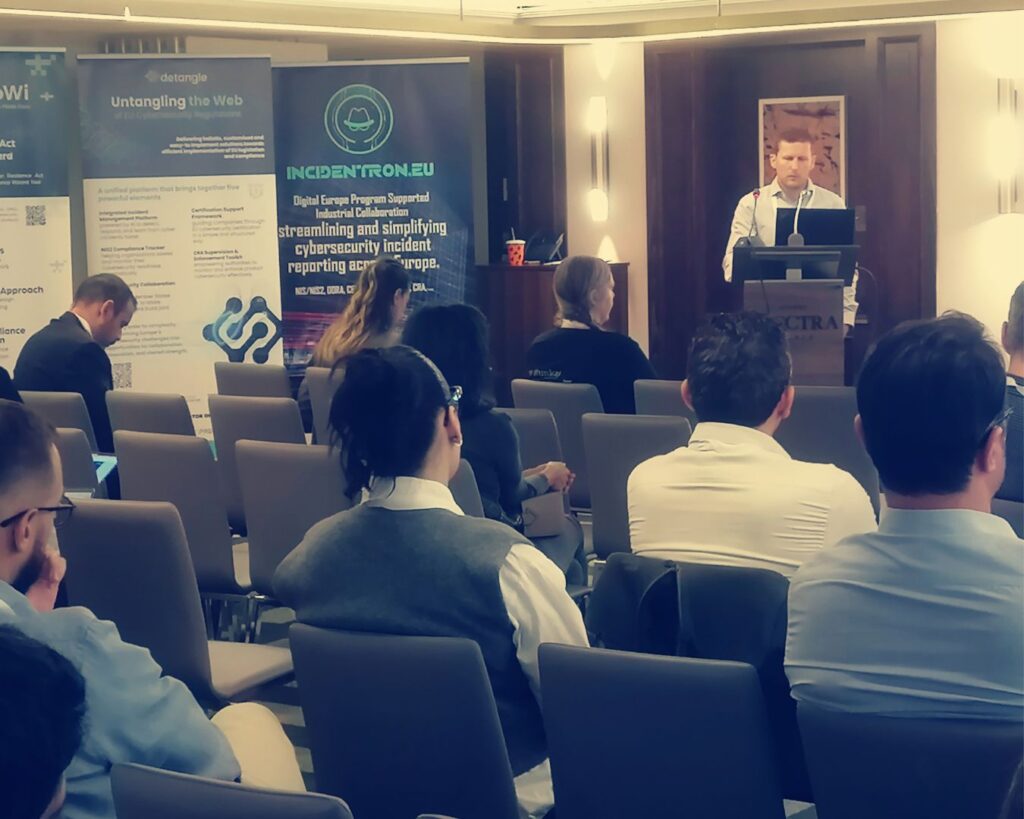
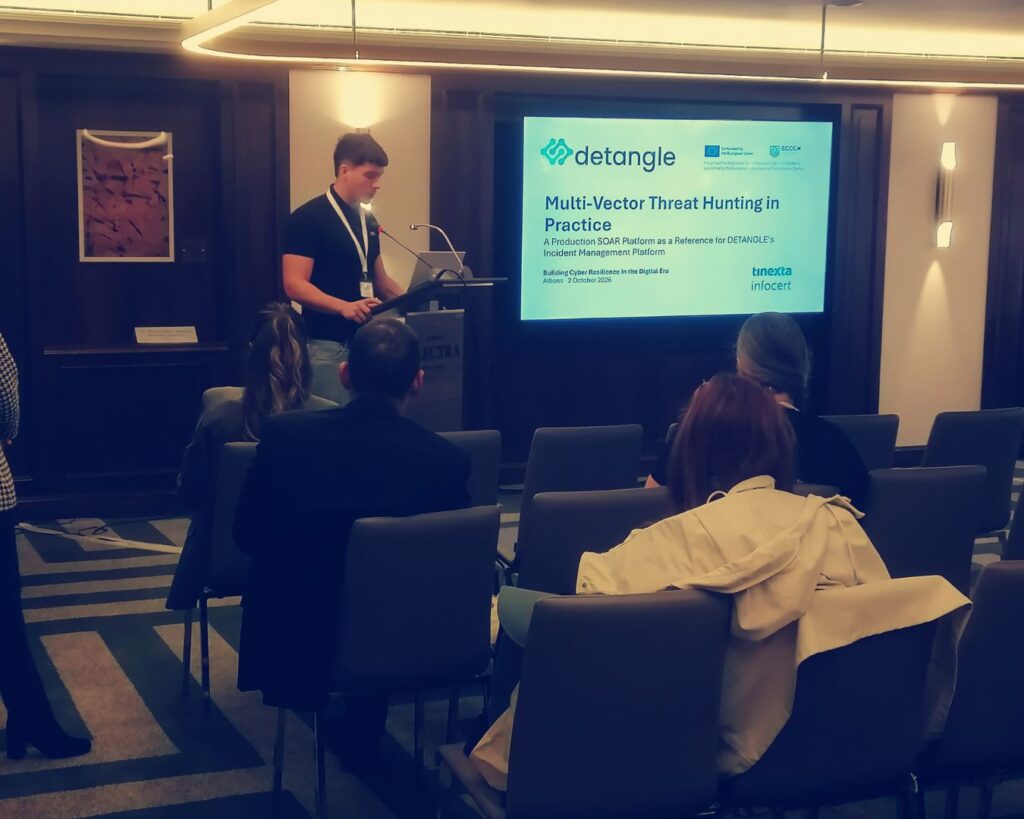
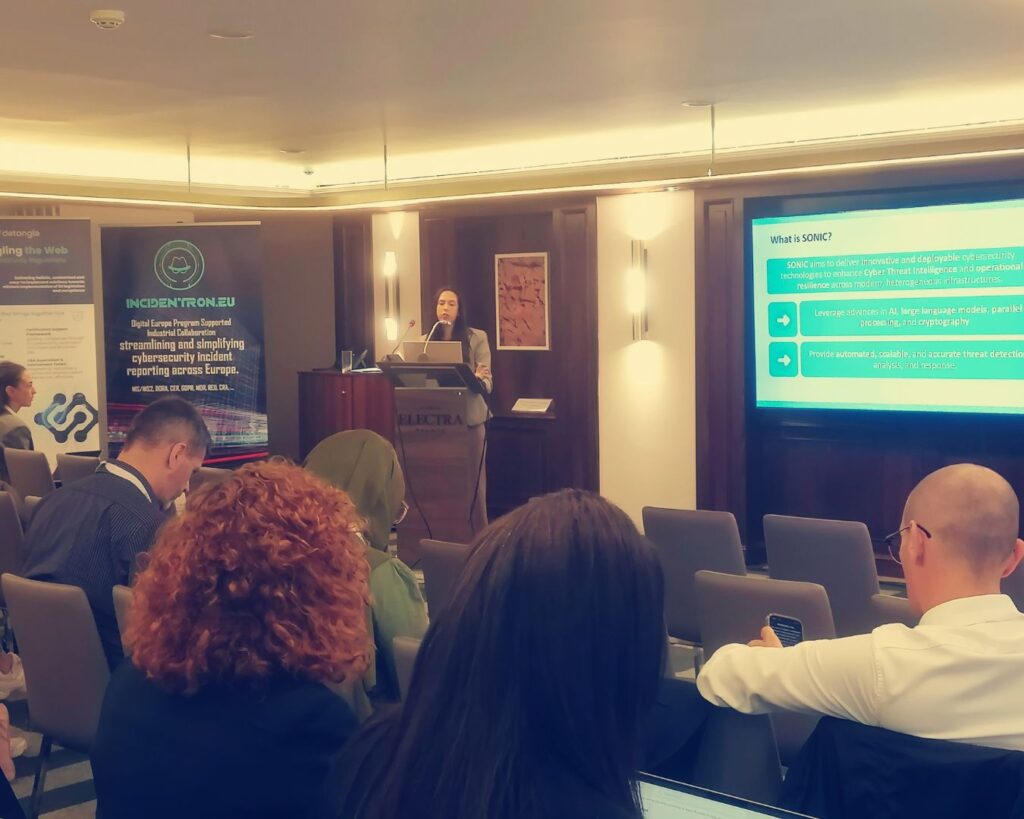
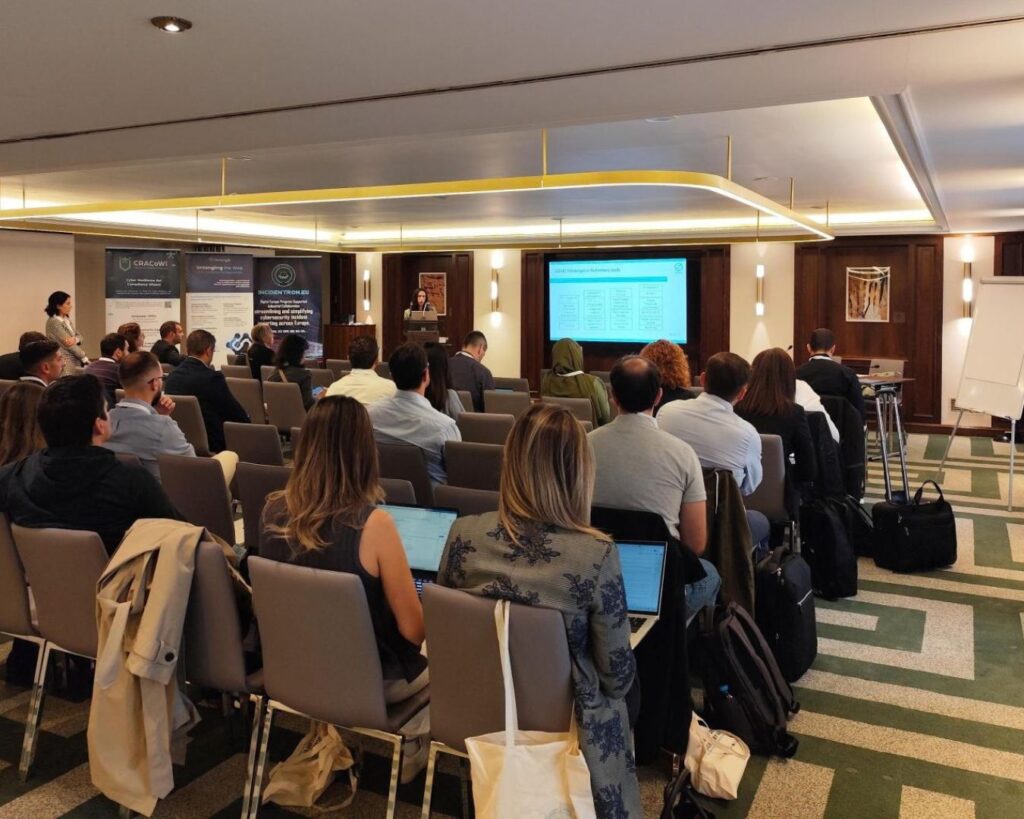
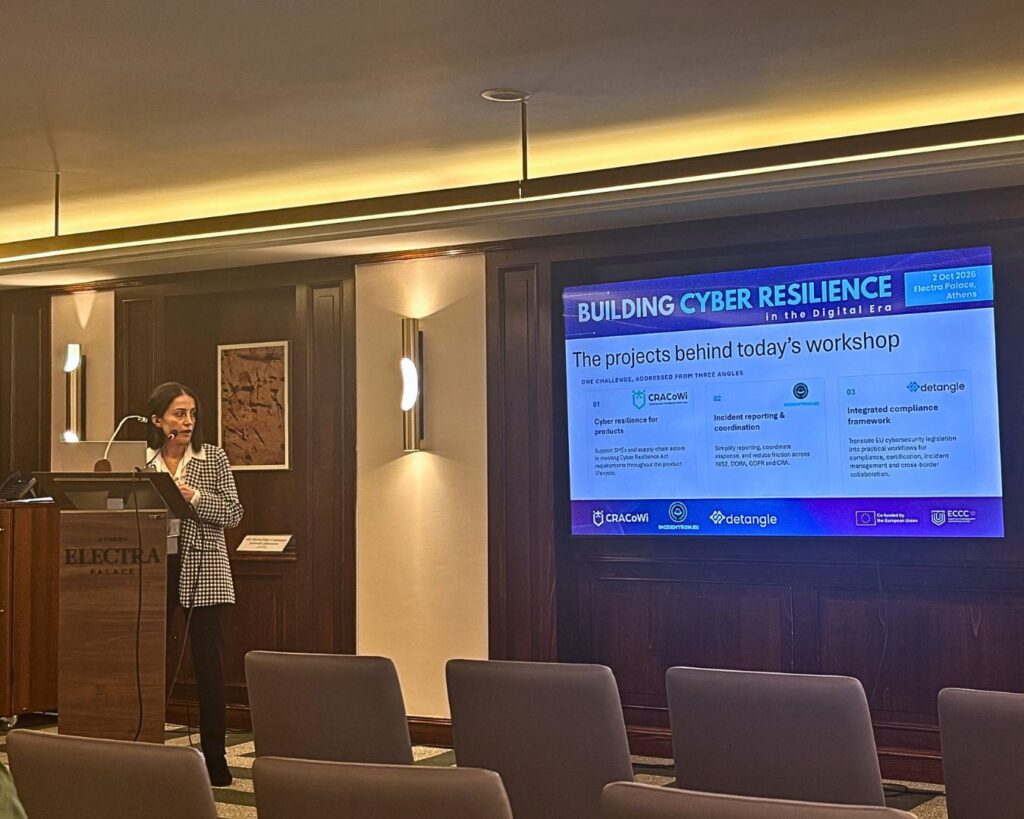
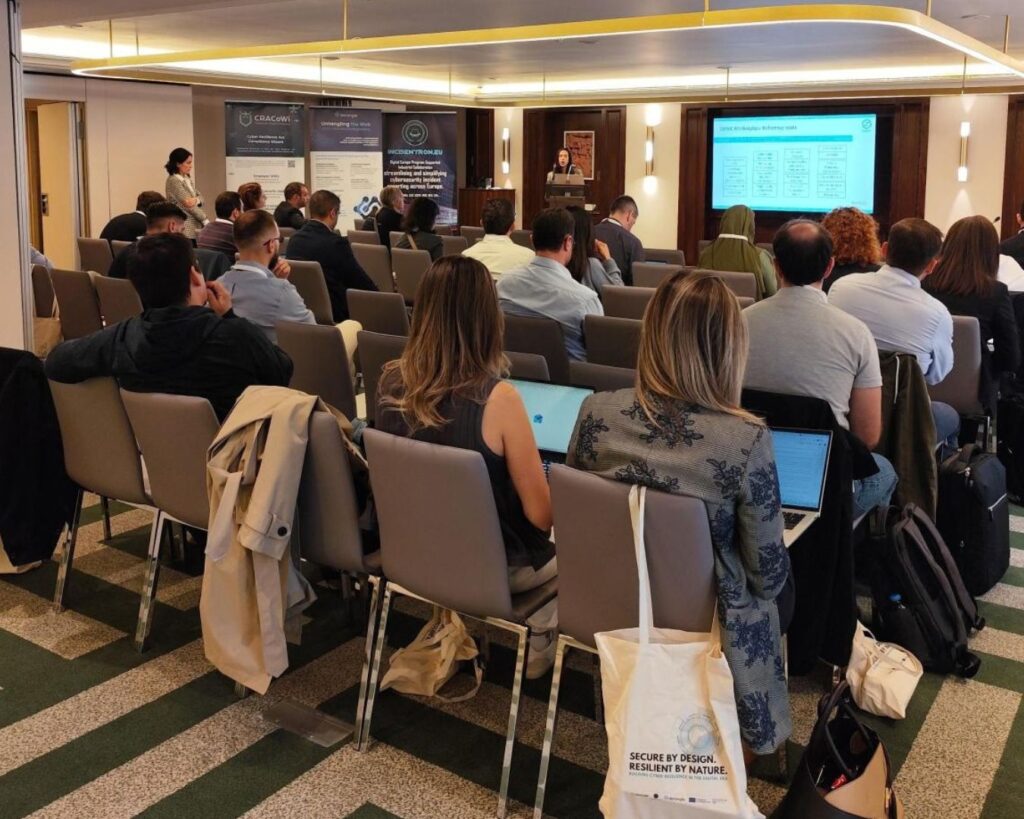
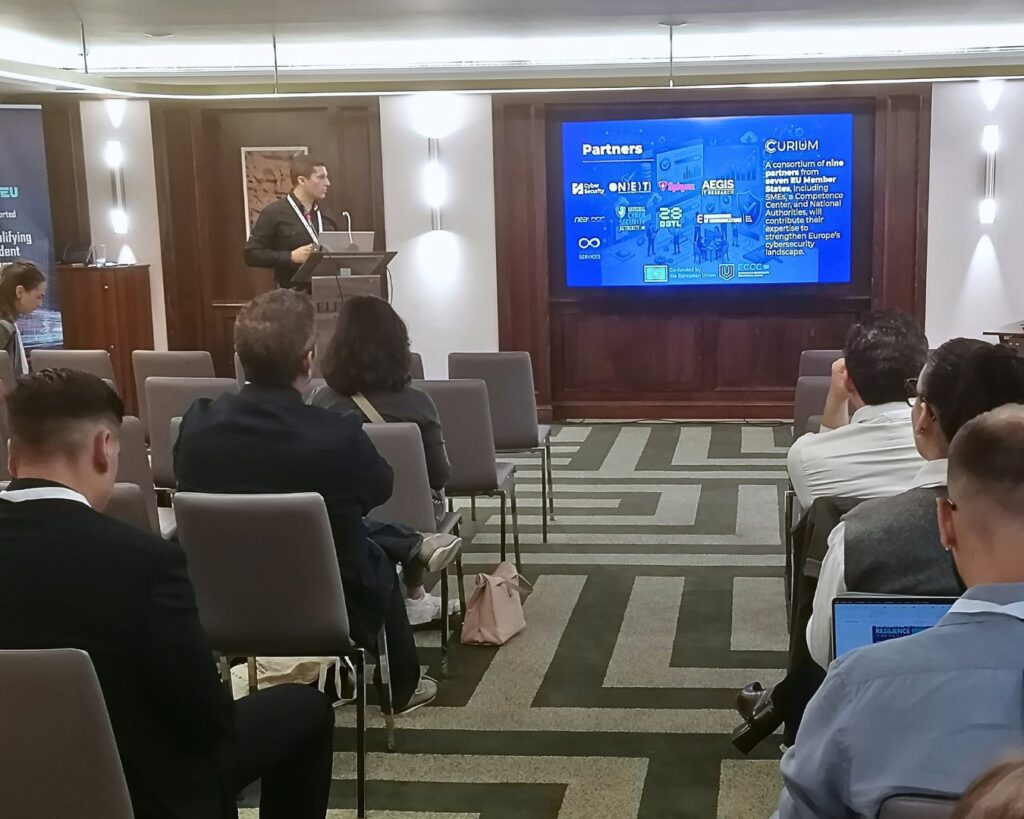
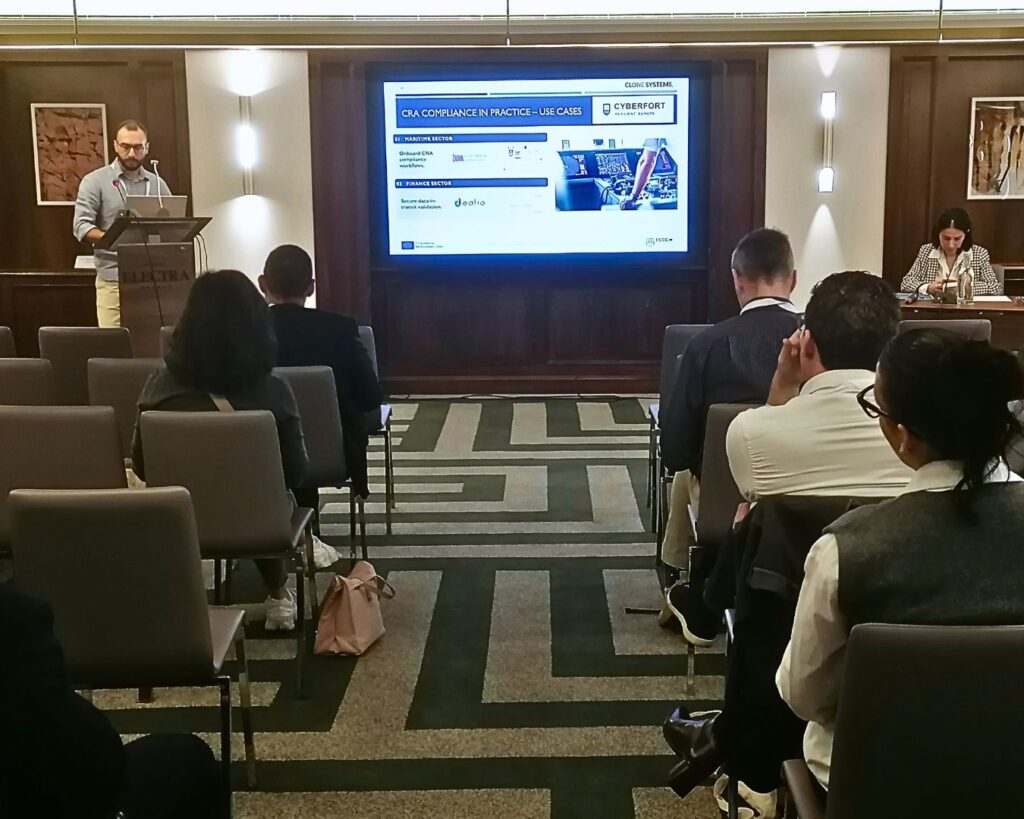
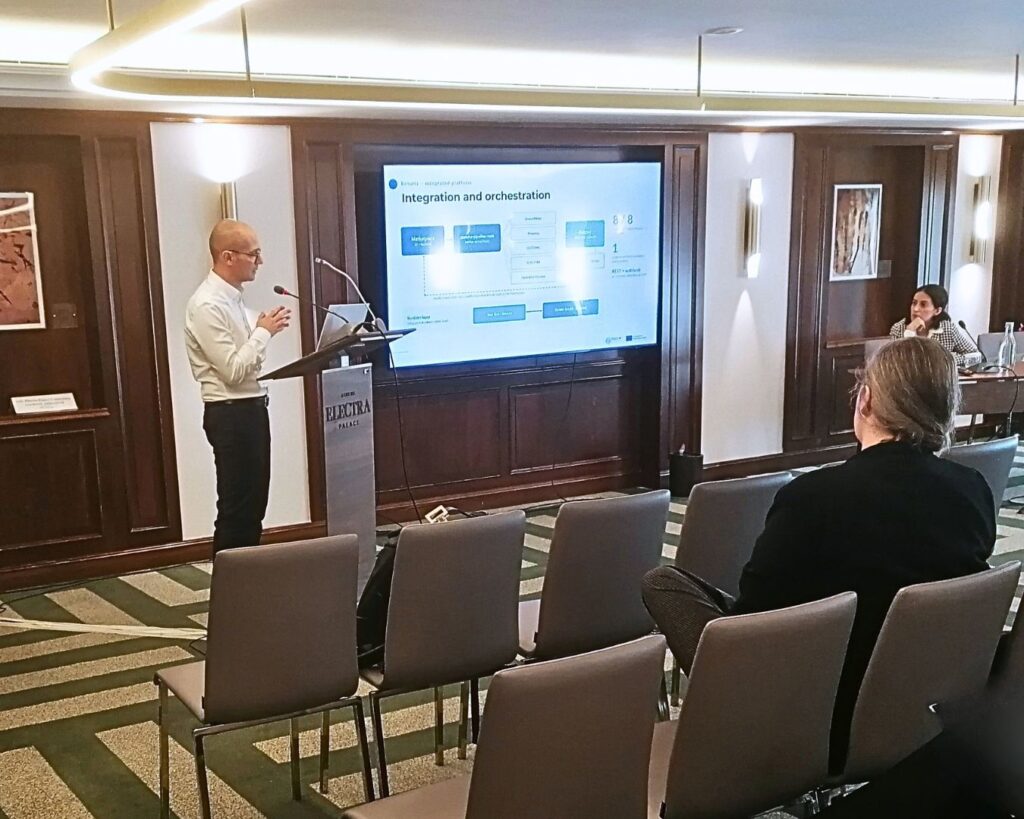
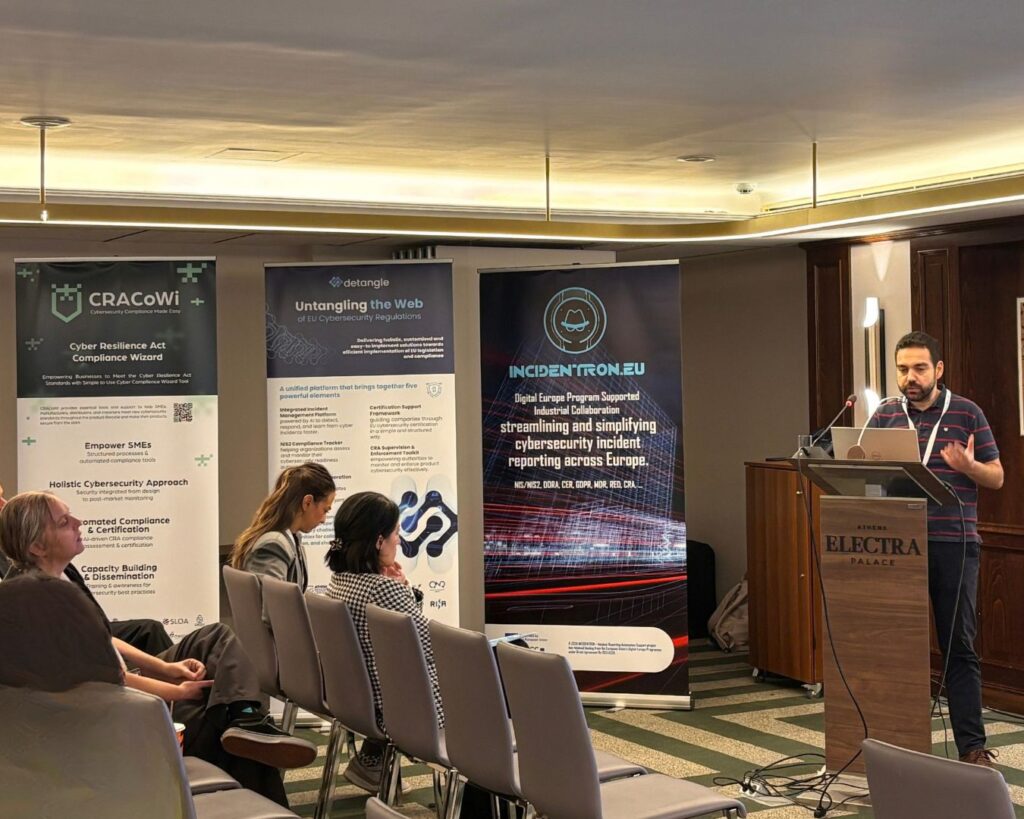
How can European cybersecurity projects and collaboration between them help turn regulatory requirements into practical action? This was one of the central question at Building Cyber Resilience in the Digital Era, held on 2 October 2026 in Athens, Greece.
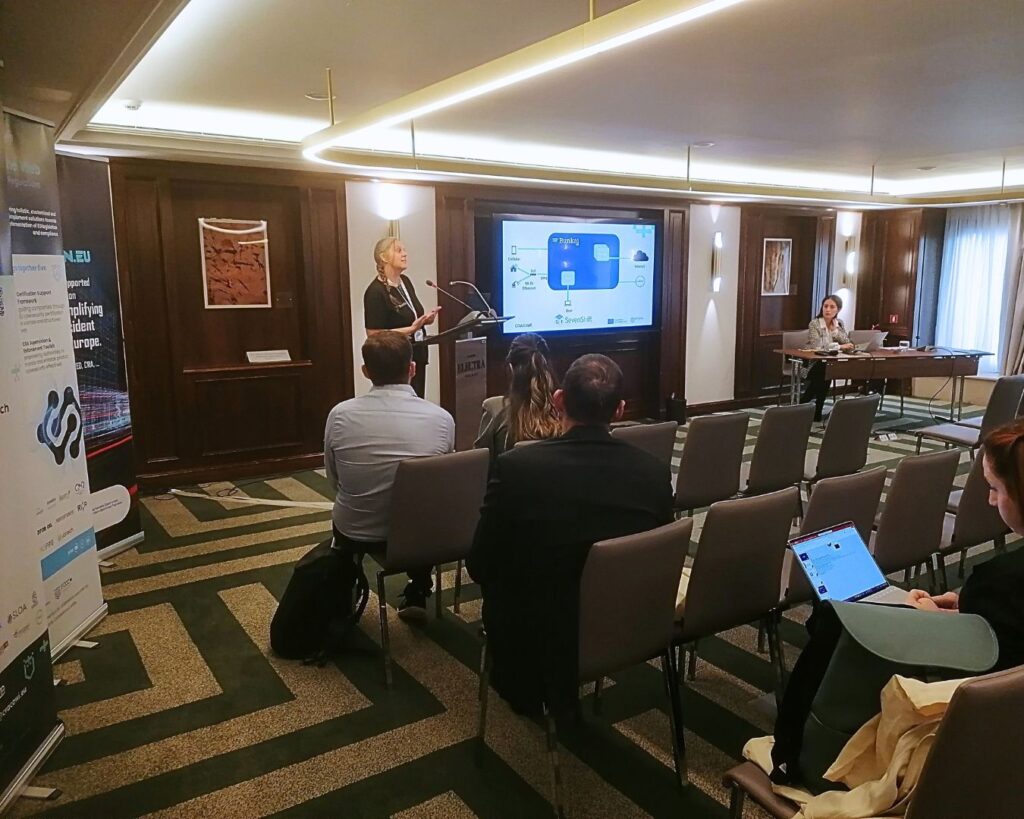
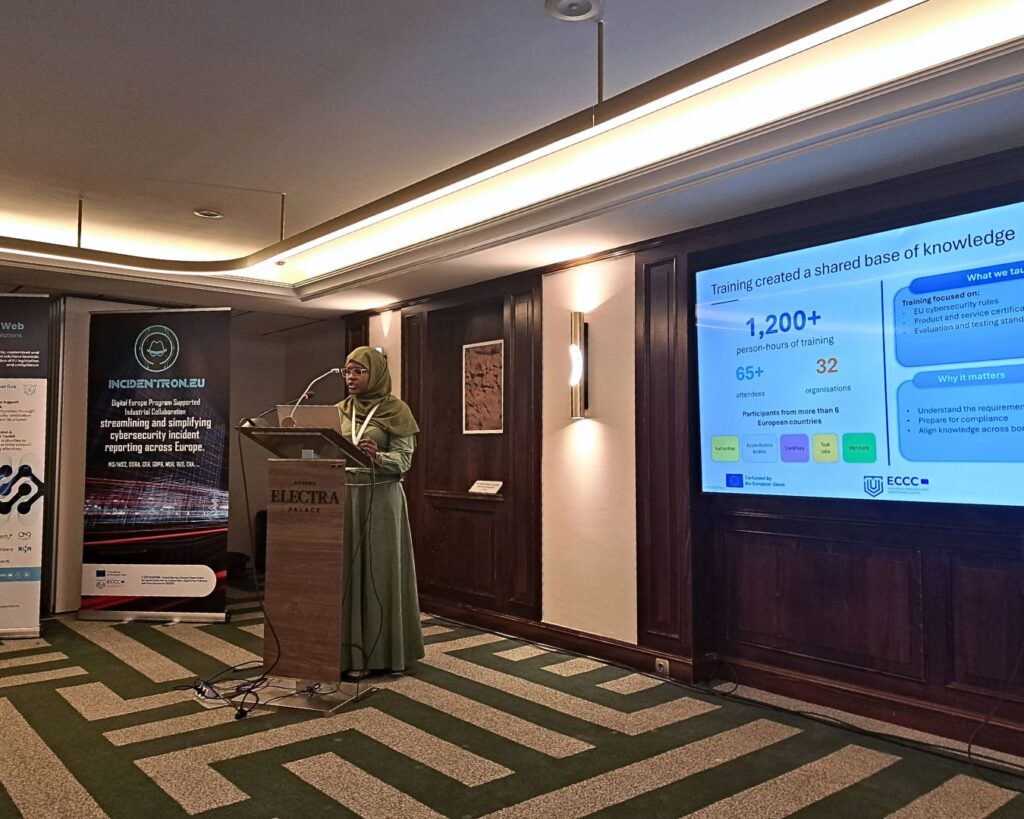
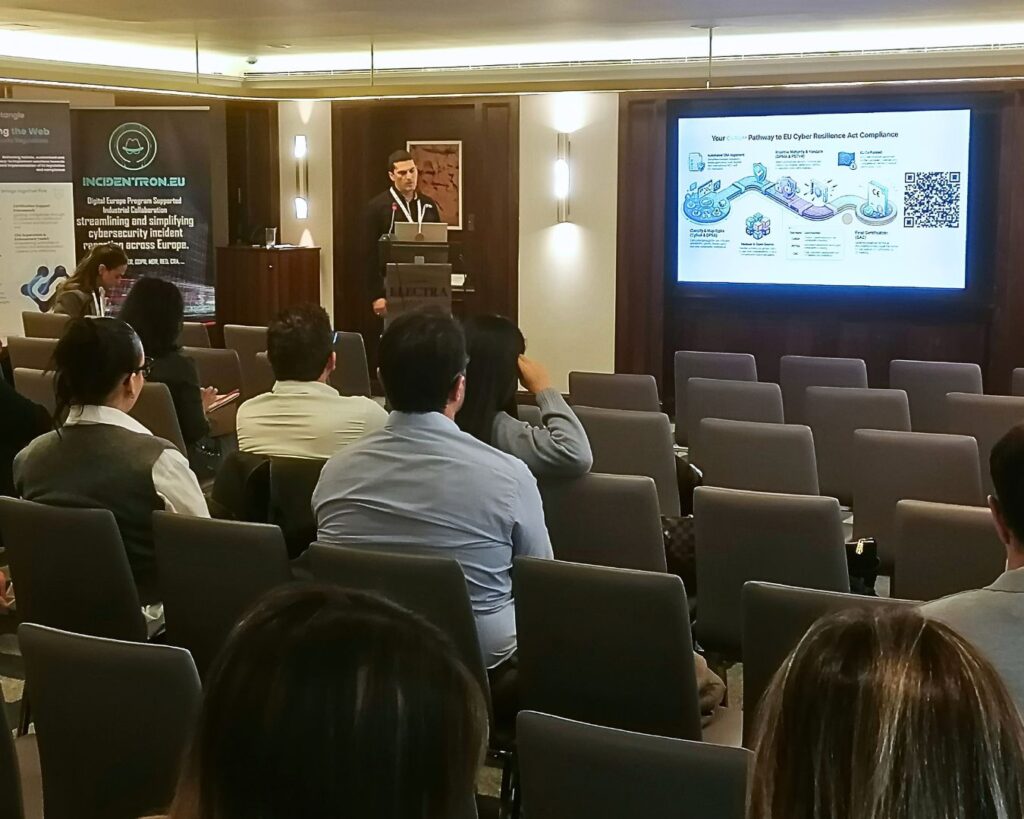
Jointly organised by the EU-funded projects CRACoWi, DETANGLE and INCIDENTRON, the event brought together more than 40 participants and representatives of 11 EU-funded projects to exchange knowledge, share experiences and explore opportunities for collaboration in strengthening Europe’s cybersecurity resilience.
The event was opened by Dr. Siranush Akarmazyan (ITML), setting the stage for discussions on the challenges and opportunities surrounding cybersecurity regulation and its practical implementation.
The event focused on three closely connected areas: the NIS2 Directive, the Cyber Resilience Act (CRA), and cross-border cybersecurity incident response.
These topics represent different but complementary aspects of Europe’s approach to cybersecurity. While regulatory frameworks establish requirements and responsibilities, organisations also need practical knowledge, tools and capabilities to implement them effectively.
The workshop brought together representatives of CRACoWi, DETANGLE, INCIDENTRON, OSCRAT, SONIC, CURIUM, WEM Cyber, CYBERFORT, CyberSynchrony, APPtake and TrustBoost.
Each project contributes to the broader European cybersecurity ecosystem, and bringing them together provided an opportunity to exchange experiences and identify common interests across their activities.
Moving Beyond Compliance
One of the central messages of the event was that building digital resilience requires more than compliance – it requires continuous collaboration, preparedness and action.
For CRACoWi, this message is particularly relevant. The project is developing practical support to help companies, especially SMEs, understand and address Cyber Resilience Act requirements through the CRACoWi Wizard, free CRA Scope Assessment and CRAcademy knowledge resources.
However, CRA implementation does not happen in isolation. Companies operate in a broader cybersecurity environment where regulatory obligations, technical challenges and operational preparedness are increasingly interconnected.
Events bringing together complementary EU-funded initiatives provide an opportunity to share expertise, learn from different approaches and strengthen the connections needed to support organisations effectively.
Strengthening Collaboration Between EU-Funded Projects
Beyond individual project activities, the workshop highlighted the value of cooperation within the European cybersecurity ecosystem.
Bringing together 11 projects around shared challenges created opportunities for knowledge exchange and further collaboration, helping participating initiatives better understand each other’s work and identify areas of common interest.
For CRACoWi, such exchanges are an important part of connecting the project’s activities with the wider European efforts to strengthen cybersecurity and support organisations facing new regulatory requirements.
The event reflected a shared ambition among the participating projects: to turn regulation into action, compliance into resilience, and shared challenges into opportunities for collaboration.
CRACoWi thanks the co-organisers, participating projects, speakers and all attendees who contributed to the event and its discussions.
We look forward to continuing the exchange and building on the connections established in Athens.
The major question for many companies in the European Union, which makes them feel uncertain, is “Which security rules should be followed and which of these are or are becoming important?” These rules are the Cyber Resilience Act (CRA) and the NIS2 Directive. While both focus on different aspects and their aim is to improve the level of digital security in Europe, many small and medium companies do not know which one they need to follow or if they need to follow both. The article’s purpose is to explain these two rules in simple language, highlighting the main differences and helping companies understand what they must do. Both rules and their aims are clearly presented and explained in publications from the European Commission (European Commission 2023a, European Commission 2023b). The CRA is a rule created to make digital products more secure before they reach customers and to keep them secure during their full lifetime. A digital product can be software, hardware, or at any device with a digital element. Any company that builds digital products, sells them, or brings them into the European Union must follow the CRA. This includes software developers, manufacturers of smart devices, distributors, and even companies based outside the European Union that want to place their products on the European market. The CRA asks companies to design products with care for security from the start, to carry out risk checks before release, to fix security problems quickly, to keep products updated, and to report serious issues. These expectations are described by the European Commission and supported by guidance from ENISA which is the security agency of the European Union (European Commission 2023a, ENISA 2023). NIS2 Directive focuses on how organizations run their services. It applies to companies, critical infrastructures, and public bodies that provide important services in areas such as energy, water, transport, health, public administration, and digital infrastructure. It also applies to managed service companies that look after systems for other organizations. NIS2 asks organizations to keep strong security practices in place, report incidents quickly, control risks from suppliers, prepare crisis and continuity plans, and ensure that leaders understand their responsibility. These points are listed in the NIS2 Directive and explained further in guidance produced by ENISA (European Commission 2023b, ENISA 2023). The main differences between the CRA and NIS2 are shown in Table 1, which provides a clear side by side comparison of their focus, scope, and legal structure.
Table 1: Comparison of the CRA and NIS2.
Main focus
Security of products with digital element
Security of the organization and its processes
What is applied to
Products that companies build or sell
Services that companies provide and the way they operate
Legal form
Applies directly across all European Union countries
Must be turned into national laws by each country
What it covers
Software and hardware products
Company systems, networks, operations, and service delivery
Core idea
Make products secure from the start and keep them secure
Keep organizational processes and services secure at all time
Basis of information
European Commission documents (European Commission 2023a)
European Commission documents (European Commission 2023b)
While the differences between CRA and NIS2 are clear, the situation in which companies must foll the CRA, NIS2 or both are presented in Table 2, which summarizes the main condition for these three cases.
Table 2: Which companies must follow CRA, NIS2 or both (ENISA 2023).
Rule / Case
Companies that must follow it
Examples
CRA
Companies that build software or digital devices, sell them in the European Union, or import them
Software developers, device makers, digital product distributors
NIS2
Companies that provide essential or important services, belong to a listed sector, or act as managed service providers
Energy providers, health services, transport operators, IT service companies
Both CRA and NIS2
Companies that build digital products and also operate in essential sectors, or software vendors that support critical fields
A medical device maker, a software company serving critical infrastructure, a managed service company that also builds products
There is also confusion for small and medium companies. Many software companies believe they must follow NIS2 even when they only build products and do not provide essential services. In most situations these companies fall under the CRA but not NIS2. Other companies think CRA applies to them even though they only offer services and do not develop products. These companies often fall under NIS2 but not the CRA. Software as a Service (SaaS) companies must look closely at their situation. More specifically:
If a company delivers the product as a service, it might fall under NIS2.
If the company also sells the software as a product, it might fall under the Cyber Resilience Act (CRA) as well.
These situations are discussed in various European guidance notes and explain why companies must review their setup carefully (ENISA 2023).
Every company should know what steps to take next. The steps for each different company situation are displayed in Table 3.
Table 3: Recommended Next Steps for Companies Under CRA, NIS2, or Both
Company Situation
Recommended Next Steps
Company must follow the CRA
Introduce security into every stage of product design and development.
Set up a clear process for fixing security problems.
Maintain required documentation.
Determine the correct CRA product category.
Learn about relevant reporting duties.
Company must follow NIS2
Review the current operational security level.
Establish a fast incident-reporting process.
Assess risks arising from suppliers.
Train leadership in security responsibilities.
Prepare for audits
Company must follow NIS2
Align product security efforts with operational security measures.
Avoid duplicated work by using shared processes for reporting and risk management.
Both the European Commission and ENISA advise companies to begin preparing early because meeting the requirements takes time (European Commission 2023a, European Commission 2023b, ENISA 2023).
In conclusion, the CRA focuses on the security of products and the NIS2 directive focuses on the security of services. A company that builds products should look at the CRA. A company that runs essential services should look at NIS2. Some will need to follow both rules. Understanding the difference helps companies prepare and avoid confusion during this new period of digital security in the European Union.
This article is based on information from the European Commission and from ENISA which are the official sources for these rules.
References:
ENISA 2023, Guidance on CRA and NIS2, European Union Agency for Cybersecurity, viewed 2023.
European Commission 2023a, Cyber Resilience Act, European Commission, viewed 2023.
European Commission 2023b, NIS2 Directive Information Page, European Commission, viewed 2023.
📅7 October 2026 | 9:00 – 17:00 CEST | CITYHUB, Am Hauptbahnhof 6, Bonn| Hybrid | English & Germany | Free
The CRACoWi team is heading to Bonn!
On 7 October 2026, CRACoWi will join fellow European projects, cybersecurity experts, standardisation specialists and companies at CRA Standards Unlocked – EU Tour in Bonn, part of a European workshop series dedicated to helping organisations understand and prepare for the Cyber Resilience Act (CRA).
CRACoWi partners Bureau Veritas, SevenShift, ONEKEY and Erminas will be there, and we invite companies, SMEs and other stakeholders working on CRA compliance to join us and meet the team.
From CRA Requirements to Standards and Practical Compliance
As companies move from understanding the Cyber Resilience Act towards its practical implementation, questions around standards are becoming increasingly important.
Which standards will support CRA compliance? How are harmonised standards being developed? What will they mean for product development and conformity assessment? And what practical tools are already available to help companies prepare?
CRA Standards Unlocked will bring these discussions together in one place.
The programme will cover the CRA standardisation process and the roles of European and national standardisation organisations, followed by presentations on horizontal and product-specific standards currently under development.
Participants will also hear about CRA market surveillance, implementation from a manufacturer’s perspective and how CRA compliance could influence the European digital single market and cybersecurity landscape.
Discover CRA Compliance Tools and Support
Understanding the standards is only one part of preparing for the CRA. Companies also need practical ways to translate regulatory requirements into their own processes and products.
Dedicated sessions at the event will therefore introduce compliance tools and funding opportunities being developed through Digital Europe Programme projects.
This is also where collaboration between projects working within the wider CRA ecosystem becomes particularly valuable. By bringing together different expertise, tools and approaches, CRA Cluster initiatives can help companies find the support that best responds to their specific compliance challenges.
CRACoWi is contributing to this effort by developing practical support for organisations navigating the CRA, including the CRACoWi Wizard, CRAcademy resources and the free CRA Scope Assessment.
Meet the CRACoWi Team in Bonn
For CRACoWi, events such as CRA Standards Unlocked are an important opportunity not only to share what we are developing, but also to meet companies directly, hear about their challenges and exchange knowledge with other projects working towards practical CRA implementation.
Representatives from Bureau Veritas, SevenShift, ONEKEY and OIXIO Erminas will represent CRACoWi in Bonn.
If you are preparing for the CRA, working with products with digital elements or simply want to understand how standards and practical compliance tools can support your organisation, come and meet the CRACoWi team.
📅 7 October 2026 | 09:00–17:00 📍 CITYHUB, Am Hauptbahnhof 6, 53111 Bonn, Germany 💻 Hybrid event – onsite and online participation
Onsite participation is limited, so make sure to register in advance.
Join us in Bonn and be part of the conversation on turning CRA requirements and standards into practical compliance.
CRACoWi has been featured in a new article by Frank Bold, introducing the project and the support it offers to small and medium-sized enterprises preparing for the Cyber Resilience Act (CRA).
The article, published on 17 September, is part of a series aimed at helping Czech companies navigate CRA implementation by introducing European projects, resources and tools that can support them in this process. In the latest interview, Kristína Šabová from Frank Bold speaks with Sandra Bortek, representing the CRACoWi project, about the practical support CRACoWi can provide to SMEs and how Czech companies can benefit from the project’s activities.
Bringing CRACoWi closer to Czech SMEs
The interview introduces CRACoWi’s overall objective and the tools and resources being developed to make CRA compliance more manageable, particularly for SMEs, manufacturers, importers and distributors of products with digital elements.
One of the resources highlighted is the CRA Scope Check, already freely available through the CRACoWi website. The tool helps companies make an initial assessment of whether their product or service falls within the scope of the CRA. The interview also introduces the project’s CRAcademy, which provides webinars, workshops, FAQs, expert articles and other practical resources related to CRA implementation.
The discussion also covers the types of SMEs that can benefit from CRACoWi, the project’s ongoing use cases and pilots, and practical first steps for companies beginning their CRA compliance journey. Importantly, CRACoWi resources are available to SMEs across the EU, including companies based in the Czech Republic.
Extending CRACoWi’s reach through collaboration
Collaboration with organisations such as Frank Bold helps CRACoWi bring project knowledge and resources closer to companies in different European countries and connect with national SME communities.
We would like to thank Frank Bold and Kristína Šabová for the opportunity to introduce CRACoWi to their Czech audience and for supporting the dissemination of information about the tools and resources available to companies preparing for the CRA.
CRACoWi will continue developing and sharing practical resources through the CRAcademy and its other project activities to support companies in understanding and preparing for CRA requirements.
The Cyber Resilience Act landscape continues to move quickly and after the summer break, there is quite a lot to catch up on.
Our CRACoWi partner and CRA expert Michael Beine from Bureau Veritas has put together a practical overview of some of the latest developments, from the European Commission’s CRA Guidance and ENISA’s SME maturity assessment tool to the Single Reporting Platform, Notified Bodies and ongoing standardisation work.
If you lost track of some of the developments over the summer, this is a good place to catch up. Michael’s overview provides a quick read, together with links for those who want to explore individual topics in more detail.
CRA Guidance
The European Commission released the official CRA Guidance at the end of July.
This is a must-read for organisations preparing for CRA implementation. After the legal text itself, the Guidance provides an important source for interpreting the Regulation and brings additional clarity to many, although not all, questions surrounding CRA implementation.
ENISA has published a guided self-assessment for CRA readiness, particularly intended to support small and medium-sized enterprises (SMEs).
The SME Cyber Resilience Maturity Assessment Model can help organisations assess their current level of preparedness and identify areas requiring further attention.
ENISA continues to update its FAQs and guidance related to the Single Reporting Platform.
Among the relevant information currently available are the required datasets for the different types of reports.
To avoid unnecessary overload, the current recommendation is not to register in advance, but only when a report needs to be submitted.
Another small but practically relevant detail has recently been updated: up to 21 representatives can now be registered for one manufacturer, compared with two previously.
The nomination process for CRA Notified Bodies has started in several EU Member States through the relevant national authorities.
Bureau Veritas has submitted its application and is currently participating in the nomination process.
Relevant information on national processes is available from authorities including BSI, DAkkS and ANSSI, as well as through the available information on CRA notifying authorities.
Significant progress has also been made in the development of horizontal standards, including EN 40000-1-1, EN 40000-1-2 and EN 40000-1-3, with final versions becoming available.
Seventeen vertical standards developed by ETSI (i.e. EN 304 xxx) have reached the necessary maturity to enter Enquiry Phase.
Work is also continuing on the broad vertical standards (EN IEC 62443 prAA), with the relevant working group convening in Oslo.
Together, these developments show just how quickly the wider CRA implementation ecosystem is progressing and why keeping track of guidance, reporting mechanisms, conformity assessment and standardisation is becoming increasingly important for organisations preparing for compliance.